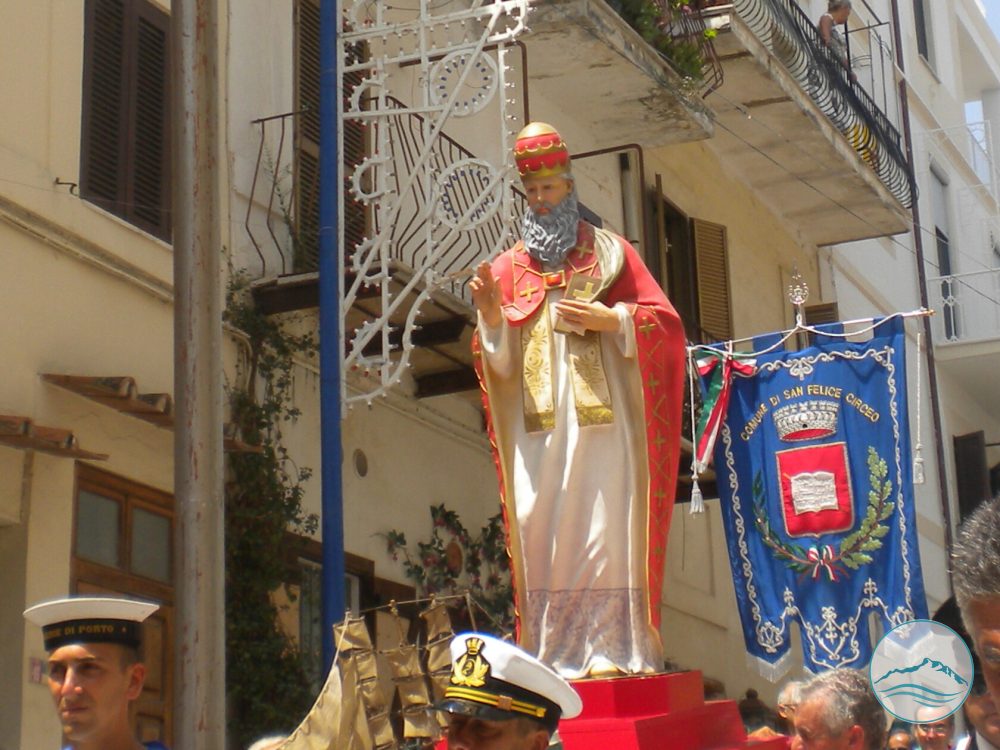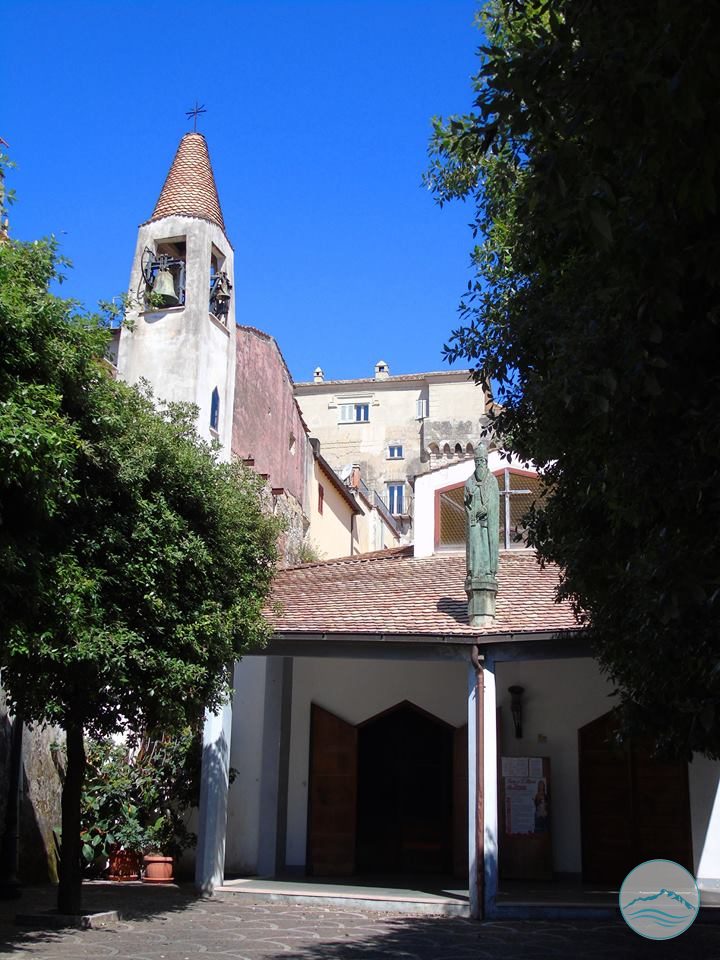
Main parish church of San Felice Circeo, dedicated to the town’s patron saint and located in the heart of the historic centre.
There has been a place of worship within the walls of the historic centre since 1647, when the Bernardoni fathers (of the Cistercian order) built a small church and convent dedicated to Saint Felix II, Pope and Martyr, near the baronial palace.
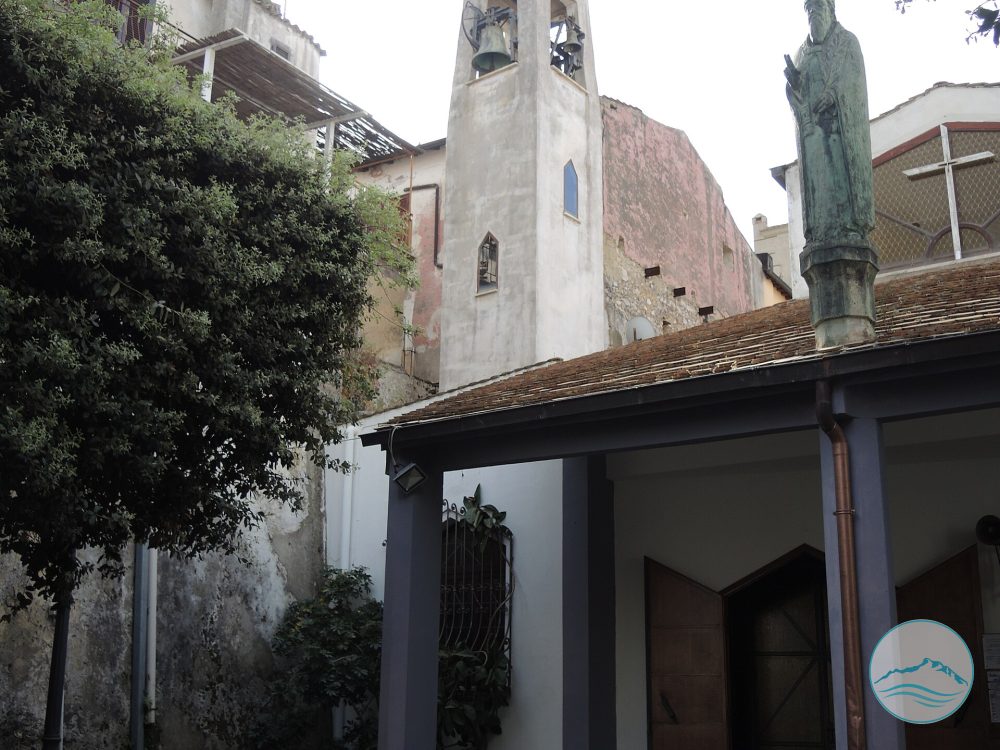
In 1727 Pope Benedict XIII considered it necessary to build a new church large enough for the great number of worshippers. He founded the church, again dedicated to Saint Felix II, Pope and Martyr, in one of the town’s central squares. With a single narrow nave, it held the relics of Saints Caesarius and Sebastian, while the bones of Saint Felix were brought only fifty years later by Pope Pius VI (who took them from the catacombs of Rome) with a solemn consecration. In the following century it was decided to enlarge the church, raising the vault in harmony with the elegant Neoclassical columned portico outside, creating two side aisles by taking over the adjacent alleys, and building the bell tower.
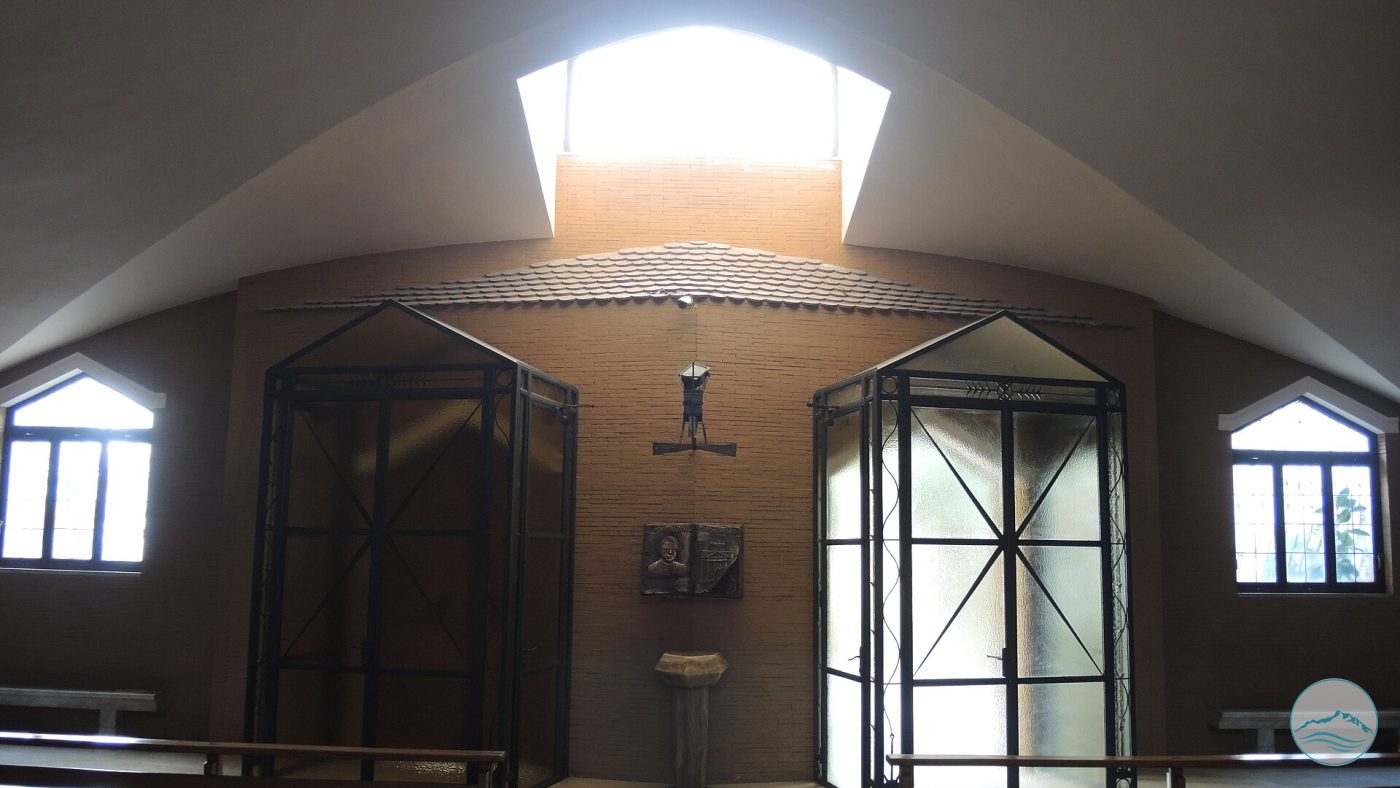
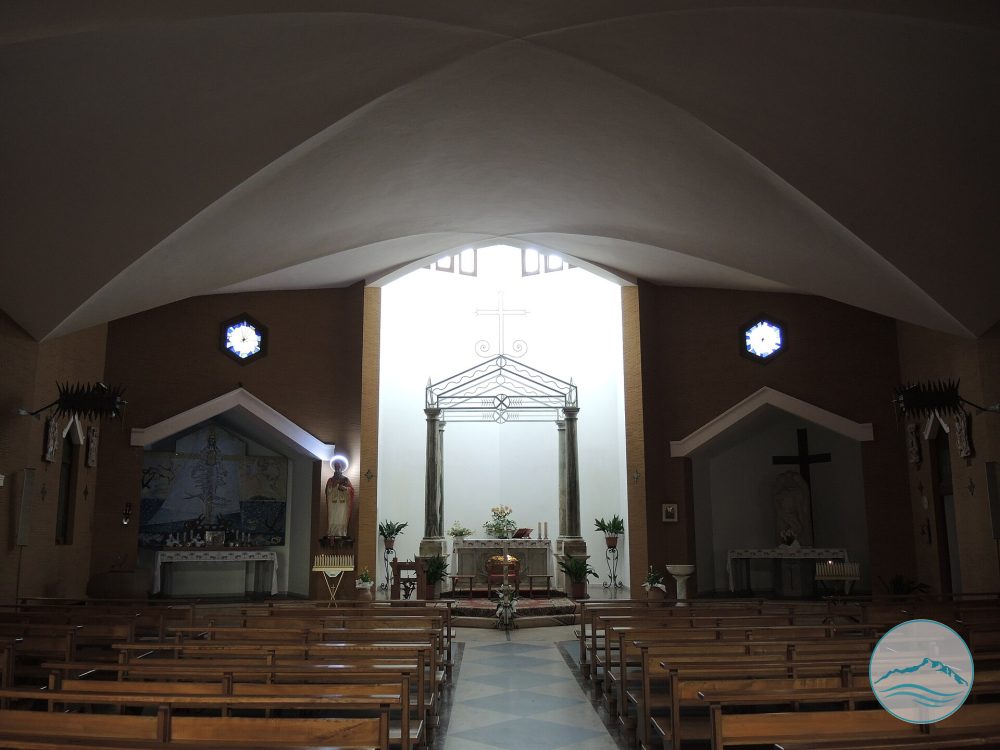
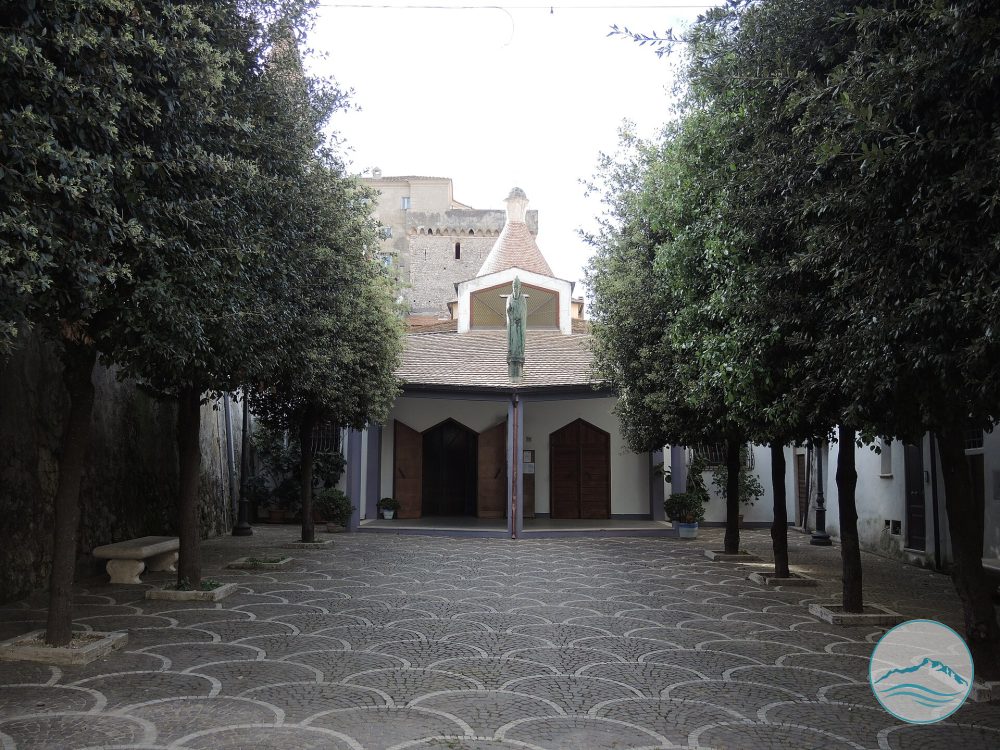
The 18th-century building showed serious signs of wear, which led to its demolition at the end of the 1950s. The new church was built on the same site, designed by the architect Clemente Busiri-Vici. Its elegant tent-like structure rises to the conical dome above the high altar (the original 18th-century one). The roof is covered with terracotta scale-like tiles (recently restored) and is topped by the statue of the patron saint, who seems to bless the square in front. The interior is very spacious: the high altar, containing the saint’s urn, is surmounted by a canopy with four precious marble columns from the old church; on the left, the side altar holds the mosaic of the “Risen Christ of the Sea” by Carlo Busiri-Vici (son of the architect); the space to the right of the altar holds the marble group of the “Pietà” by the sculptor Angelo Gemini. The church also has a statue of the co-patron Saint Roch of Montpellier in a side chapel near the entrance, and one of Our Lady of the Assumption high above the altar. Also notable are the exhibitions regularly held in the space at the back, on religious themes such as the Holy Shroud or on local history, such as the Templar monks.
A curious doubt has persisted over the centuries about which saint the name refers to. Some sources link the title to Saint Felix II, Pope and Martyr, others to Felix, priest and martyr. The former was a well-known antipope, probably never martyred; the tradition of considering him a martyr of the Church comes from confusion with a soldier martyr of the same name, also buried along the Via Appia. The link with the pope was first mentioned in a document of 1832, drawn up after the enlargement of the old parish church under the pontificate of Gregory XVI and recorded on a marble plaque, but without the ordinal “II”, which makes it hard to date. The second hypothesis refers to the priest Felix who, together with the monk Eusebius, both from Terracina, were martyred by beheading. Their crime was to have converted and baptised the people of Terracina. This martyrdom so close to the Circeo would probably have encouraged the ancient rulers to name the town after the martyr Felix, also as a symbol of the close bond with the neighbouring city.