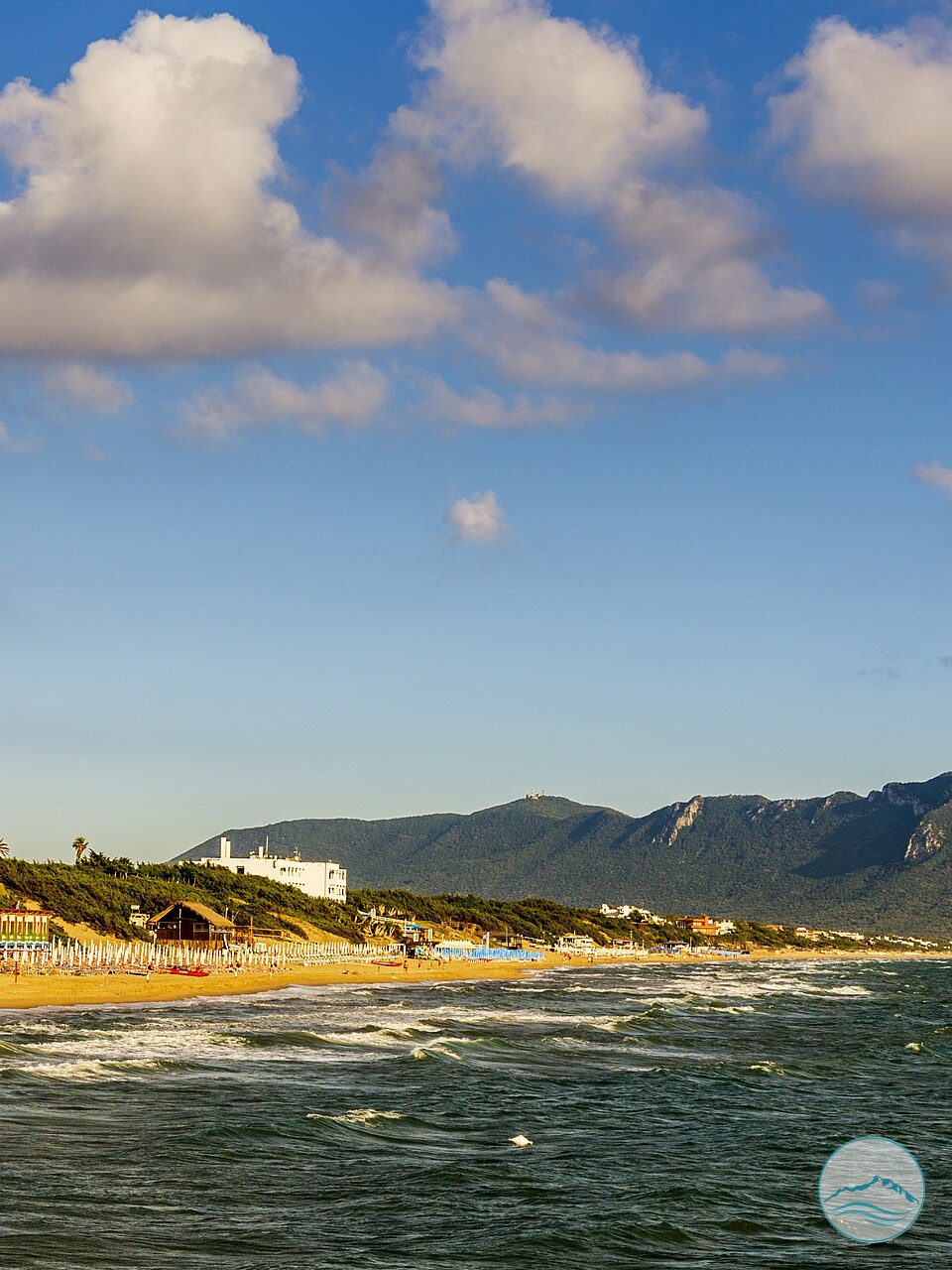
Site of Community Importance protecting the natural habitats of the northern side of the Circeo promontory, the so-called “Quarto Freddo”.
The Circeo promontory, whose highest peak reaches 541 m above sea level, was once an island; today it is joined to the mainland by the Pontine plain. Because of its particular exposure, it has always been notionally divided into four parts: the Quarto Freddo facing north, the Quarto Caldo facing south and the two temperate quarters in between. This exposure, so sharply divided by the points of the compass, creates a very distinctive difference in the plant and animal communities living in the different “Quarters”. The result is a remarkable biodiversity, recognised by the European Community too: on the promontory, in the Pontine plain, on the islands and in the surrounding sea, several Natura 2000 sites have been identified, as Sites of Community Importance (under the Habitats Directive 92/43/EEC) and Special Protection Areas (Birds Directive 79/409/EEC).
The “Quarto Freddo” is part of SCI IT6040017 and covers about 464 hectares, the whole damp, cool northern side. It runs from the ridge down to the plain, bounded by the area called Uliveto and the Brecciaro quarry (which are not included).
This side of the promontory is the one that greets us when we arrive by land, with the outline of the ridge recalling the sorceress Circe and colours that change with the seasons, though only in shade, since the forest is evergreen. As a reminder that the forest once covered the whole plain, at the foot of the promontory we find typical forest species such as hornbeam and oaks – downy oak, Turkey oak, Hungarian oak and a few pedunculate and cork oaks. As we start to climb we enter the sclerophyllous woodland (plants with hardened leaves), where holm oak dominates more majestically than on the Quarto Caldo side, and where the soil is deeper it forms the typical Mediterranean holm oak forest. Higher up, the soil becomes thinner, limestone debris from the eroded rock faces increases, and the vegetation adapts to this change. The same species take on a shrubby, bushier form, and plants less demanding in terms of soil appear: strawberry tree, two species of phillyrea (latifolia and angustifolia), wild olive, tree heath – recognisable even to beginners by its splendid pinkish-white flowers from May to September – and green heather (Erica scoparia), with greenish flowers. So we reach the ridge, where the bushes of the Mediterranean scrub soften the harsh look typical of mountain ridges. Among the species introduced by people that have settled in harmony with the native ones are the Judas tree (Cercis siliquastrum), native to the eastern Mediterranean, the Balkans and Asia Minor, a tree legume with distinctive clusters of flowers along its branches and trunk, visible from March to April before the leaves appear; and black locust (Robinia pseudoacacia), another legume, native to north-eastern America and now very common in Italy, whose flower clusters are white, while those of the Judas tree are bright pink.
It is worth remembering that the people of San Felice once worked in the forest. They cut it periodically for firewood and charcoal (sharp eyes can still spot the sites of the charcoal kilns). They extracted manna from the manna ash, known for its laxative properties; they gathered acorns from the oaks as animal feed and to make flour; they collected the fruits of the mastic, called “cecinelli”, to make an oil for lighting lanterns; and they grazed their livestock. They planted and tended olive groves (the Baronial Olive Grove still survives at the foot of the northern side) and vineyards.