We owe the opening of the “Public Park at Peretto” to Italo Gemini, Mayor of the Circeo from 1956 to 1962. This splendid place is called Peretto because of the wild pear trees (Pyrus pyraster) that once grew here in great numbers. The park is mostly flat, shaded by evergreen oaks such as holm oaks (Quercus ilex) and cork oaks (Quercus suber), under which wooden tables and benches have been placed. There are evergreen shrubs typical of the Mediterranean scrub: phillyrea, with its distinctive leathery leaves (Phillyrea angustifolia and Phillyrea latifolia); myrtle (Myrtus communis), a plant known in Greek and Latin mythology and always associated with female deities such as Aphrodite; splendid rockroses (Cistus monspeliensis, Cistus incanus), with their distinctive flowers, in bloom from April to June; tree heath (Erica arborea), known for its use in making pipes; and the strawberry tree (Arbutus unedo), of the same family as heathers (Ericaceae), whose name reminds us to be careful when eating its fruit. The name comes from the Celtic “arbutus”, meaning unripe, while “unedo” seems to come from the Latin “unum tantum edo”, “I eat only one”, to remind us that too many can cause unpleasant intestinal problems! Among the shrubs and herbs twines rough bindweed (Smilax aspera), a climbing woody plant that cannot grow upright on its own but needs support, belonging to the order Liliales: typical of these environments, its berries, ripe in winter, are precious food for birds. Commonly known as sarsaparilla, the Smurfs’ favourite food, the people of the Circeo call it “strappa braghe” (“trouser-ripper”), just as its scientific name “asper” means rough, prickly, a reference to its thorns. Remember that we are in the Circeo National Park, established in 1934, which includes the Circeo promontory among its many environments. This area is called Quarto Freddo because it faces north, in contrast in both climate and vegetation with the south-facing Quarto Caldo. Besides the wealth of plant species only briefly mentioned here, it is quite common to find signs of wild boar: the patches of ground it turns over with its snout in search of food, oddly “smooth” bark where it rubs itself, and the wallow, a real beauty farm that forms where rainwater collects. At dusk you can also watch the graceful flight of bats. Looking up and keeping quiet, the song of many birds reminds us that the site is also part of the Natura 2000 network, which designates a Site of Community Importance here (SCI IT6040017), within the large Special Protection Area (SPA IT6040015). The whole Park is also an Important Bird Area. The species vary with the seasons; residents include the blue rock thrush, the jay and the common blackbird. Tawny owls and barn owls can be heard at night, along with little owls. The luckiest and most attentive may also spot the rare peregrine falcon, which nests on the cliffs of the promontory and circles here in search of food and to patrol its territory.
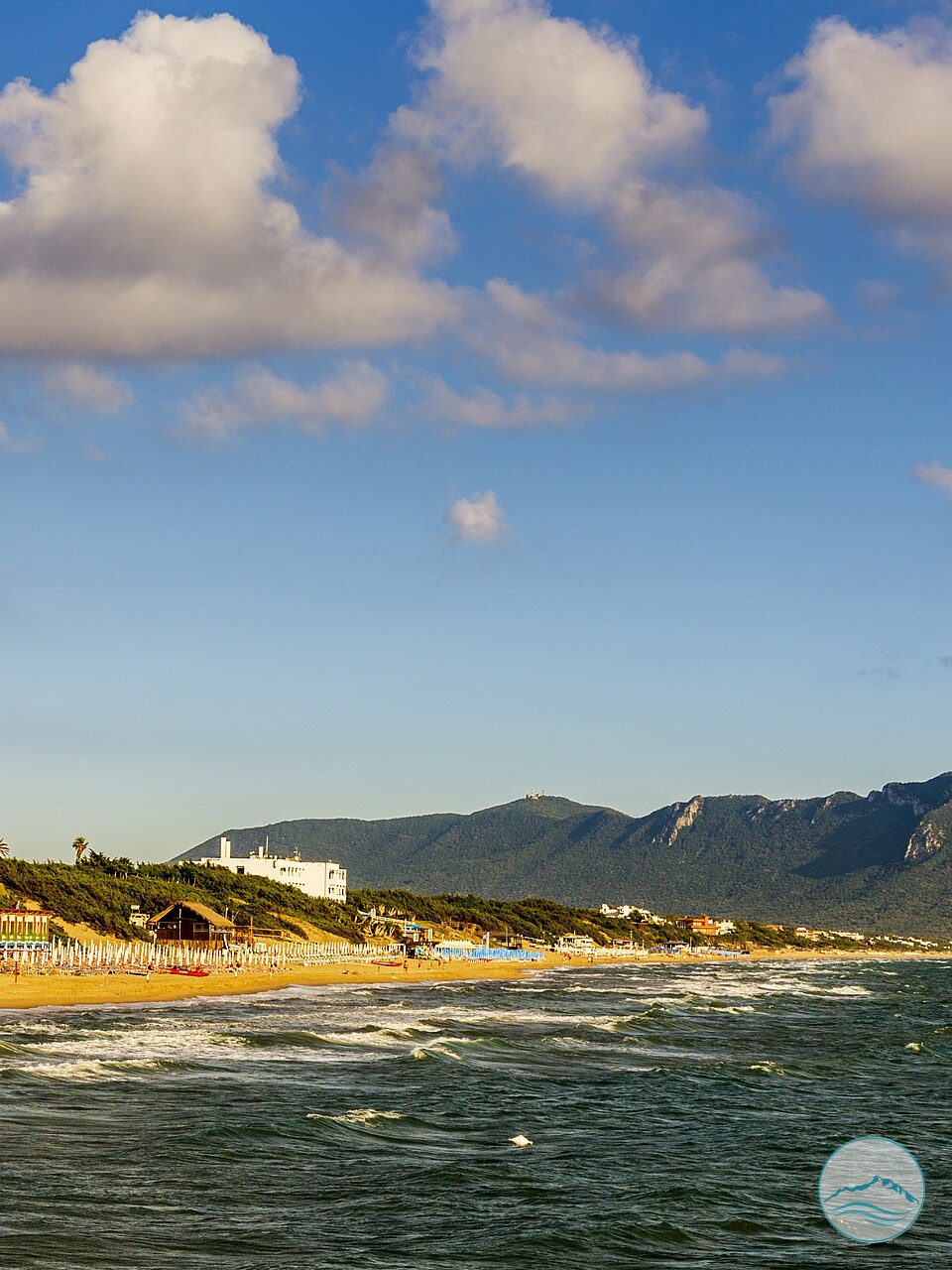
Parco del Peretto
- Period
- Mid-1950s
- Coordinates
- 41.2374, 13.0817
Curiosities
Did you know?
A little gem to share with your travel companions.
In this area you can also see several sites of historical and archaeological interest, such as the Villa with the Peretto Cistern and the Guardia Orlando fort. The people of San Felice are very attached to this place: cultural associations use it for events that respect nature, and a wedding has even been celebrated here.
Practical information
Visiting
The area can be enjoyed in compliance with the regulations in force, as we are in the Circeo National Park.
Via dell’Acropoli
Nearby
Other places just a few minutes away.
 Trails
Sentiero dei Ciclamini (Cyclamen Trail)
Nature trail named after the wild cyclamens that colour the undergrowth of the Circeo promontory in autumn, within the National Park; a particularly striking route f...
 Forts
Forts
Guardia Orlando
Fortified post on the Circeo promontory, whose name is now also linked to one of the best-known hiking trails in the area, leading to this strategic point overlookin...
Promontory trails
Trail 756 – Guardia Orlando Trail
Route connecting the ridge trail (750) with Guardia Orlando, a lookout post used during the Second World War. Remains of trenches wrapped in vegetation can be seen....
 Archaeology
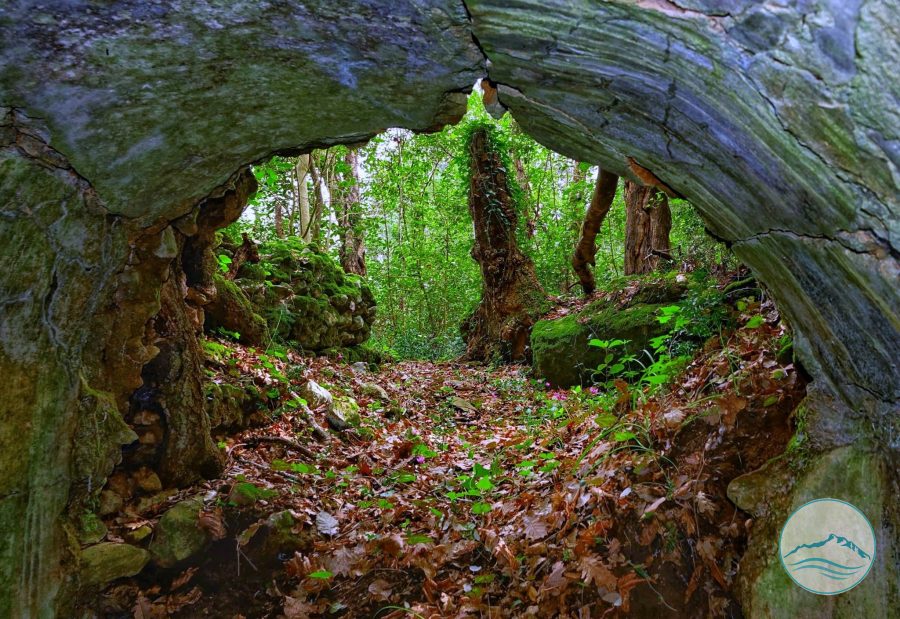
Cistern of Peretto
At Peretto a Roman cistern survives, part of the water system designed to collect and store water for the villas and settlements of ancient Circeii. Towards the end...